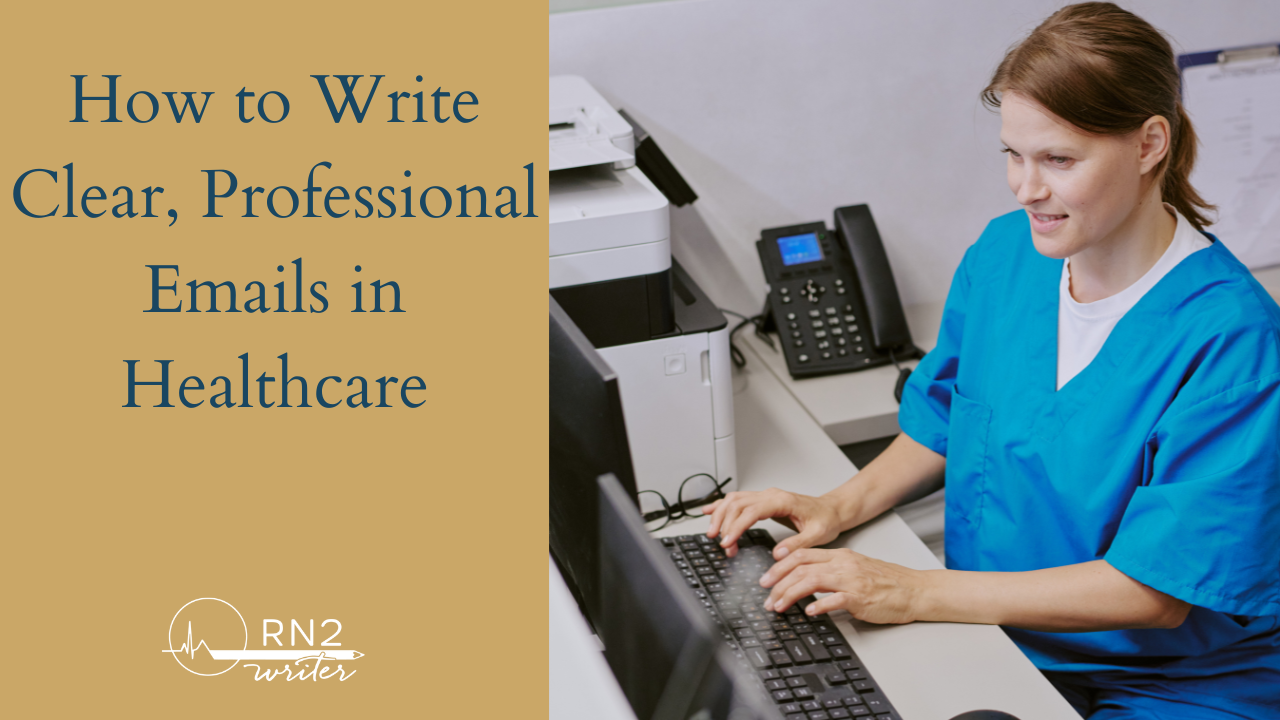
How to Write Clear, Professional Emails in Healthcare
In This Article:
Clear, professional email communication is an essential skill for nurses and healthcare professionals. From coordinating patient care to communicating with leadership, well-structured emails reduce misunderstandings, protect professional reputation, and improve interdisciplinary collaboration. This guide outlines practical strategies for writing concise, effective healthcare emails.
Email may not feel like a clinical skill.
But in modern healthcare, it absolutely is.
Nurses email:
- Physicians
- Managers
- Quality departments
- Educators
- HR
- Interdisciplinary teams
- Vendors
- Sometimes entire units
Those messages shape workflow, influence perception, and occasionally become part of official records.
Poorly written emails create confusion.
Emotionally reactive emails create tension.
Vague emails waste time.
Clear, professional communication protects you — and strengthens your credibility.
Here’s how to approach email in healthcare settings with intention.
1. Lead With a Clear Subject Line
Healthcare professionals are overwhelmed with communication.
A vague subject line like:
“Question”
“Concern”
“Follow up”
Will likely be ignored or delayed.
Instead, be specific:
- “Clarification Needed: Discharge Protocol for CHF Patients”
- “Staffing Concern – Night Shift 3/12”
- “Follow-Up on Medication Reconciliation Process”
A precise subject line increases response speed and signals professionalism.
Clarity reduces friction.
2. Get to the Point Quickly
In healthcare, long emails often go unread.
Start with the purpose.
Instead of:
“I hope you’re doing well. I wanted to reach out because earlier this week…”
Try:
“I’m writing to clarify the new wound care documentation requirements implemented on Monday.”
State the reason for the message in the first one or two sentences.
Then provide necessary context.
Concise does not mean abrupt.
It means structured.
3. Separate Facts From Feelings
High-stress environments make emotional communication tempting.
But professional email writing requires discipline.
Instead of:
“I’m frustrated that we weren’t informed about this change.”
Try:
“We were not informed of this change prior to implementation, and staff are seeking clarification.”
Notice the shift.
The second version:
- Removes blame
- Focuses on the issue
- Signals professionalism
This doesn’t mean suppressing valid concerns.
It means expressing them strategically.
4. Use Structured Formatting
Walls of text increase cognitive load.
Use:
- Short paragraphs
- Bullet points
- Clear headings (when appropriate)
- White space
For example:
“I have three concerns regarding the new scheduling policy:
- Weekend coverage gaps
- Overtime allocation
- Communication timeline”
Structure improves readability.
Readability improves response.
A Few More to Explore on This Topic
- What Your Emails Are Telling Hospital Leadership About You
- How to Advocate Professionally in Nursing Without Sounding Confrontational
- How Strong Documentation Skills Protect Your Nursing License
- Why SBAR Works in the ICU But Falls Apart in the Boardroom
- The Real Reason Nurses Get Overlooked for Leadership Roles
5. Be Specific About What You Need
Many emails stall because they don’t contain a clear ask.
End your message with a direct, professional request.
Examples:
- “Can you confirm whether this protocol applies to all shifts?”
- “Please advise on next steps.”
- “Could we schedule a brief meeting to discuss this?”
Specific requests reduce back-and-forth messaging.
Clarity saves time.
6. Assume Your Email May Be Forwarded
In healthcare organizations, emails often travel beyond their original recipient.
Before hitting send, ask:
Would I be comfortable if this were forwarded to leadership?
If the answer is no, revise.
Professional communication protects your reputation — even when emotions are justified.
Tone discipline matters.
7. Avoid Over-Apologizing
Nurses, especially women in healthcare, often soften communication excessively.
Phrases like:
“Sorry to bother you…”
“This may be a silly question…”
“I’m probably wrong, but…”
Undermine authority.
You can be respectful without diminishing yourself.
Instead of:
“Sorry to bother you, but I think there might be an issue…”
Try:
“I’d like to clarify a potential issue regarding…”
Clear does not mean aggressive.
It means confident.
8. Pause Before Sending Emotional Emails
If an interaction triggered frustration, pause.
Draft.
Step away.
Re-read later.
Ask:
- Is this objective?
- Is it solution-oriented?
- Does it clearly state the issue?
- Would I say this in a meeting?
Often, a short delay improves tone significantly.
Professional restraint builds long-term credibility.
9. Keep Records Organized
Email is part of modern healthcare documentation culture.
Maintain:
- Clear subject lines for easy search
- Organized folders
- Professional sign-offs
Small habits reduce future stress.
Organization is part of communication competence.
Why This Matters
Strong professional email communication benefits nurses by:
- Reducing misunderstandings
- Improving interdisciplinary collaboration
- Protecting professional reputation
- Strengthening leadership presence
- Increasing response efficiency
- Supporting patient safety through clarity
In many cases, your written communication speaks before you do.
It shapes how colleagues, managers, and physicians perceive you.
Final Thought
You do not need to be a “writer” to write well.
You need structure.
Intent.
Clarity.
Email may feel mundane compared to clinical skills.
But in a system driven by documentation and digital communication, the nurses who write clearly stand out — not because they are louder, but because they are precise.
Professional communication is not separate from clinical excellence.
It supports it.
Join 44,000 Nurses Who Read ShiftNotes Every Wednesday - Plus Get the Paid-to-Write Protocol FREE
Become a health writer in one afternoon with my mini-training, The Paid-to-Write Protocol. Find your first 10 magazines to pitch using my proven method.
All free, just for subscribing to my weekly newsletter ShiftNotes:
We hate SPAM. We will never sell your information, for any reason.
Author