Career Growth Strategies for Registered Nurses to Prevent Burnout
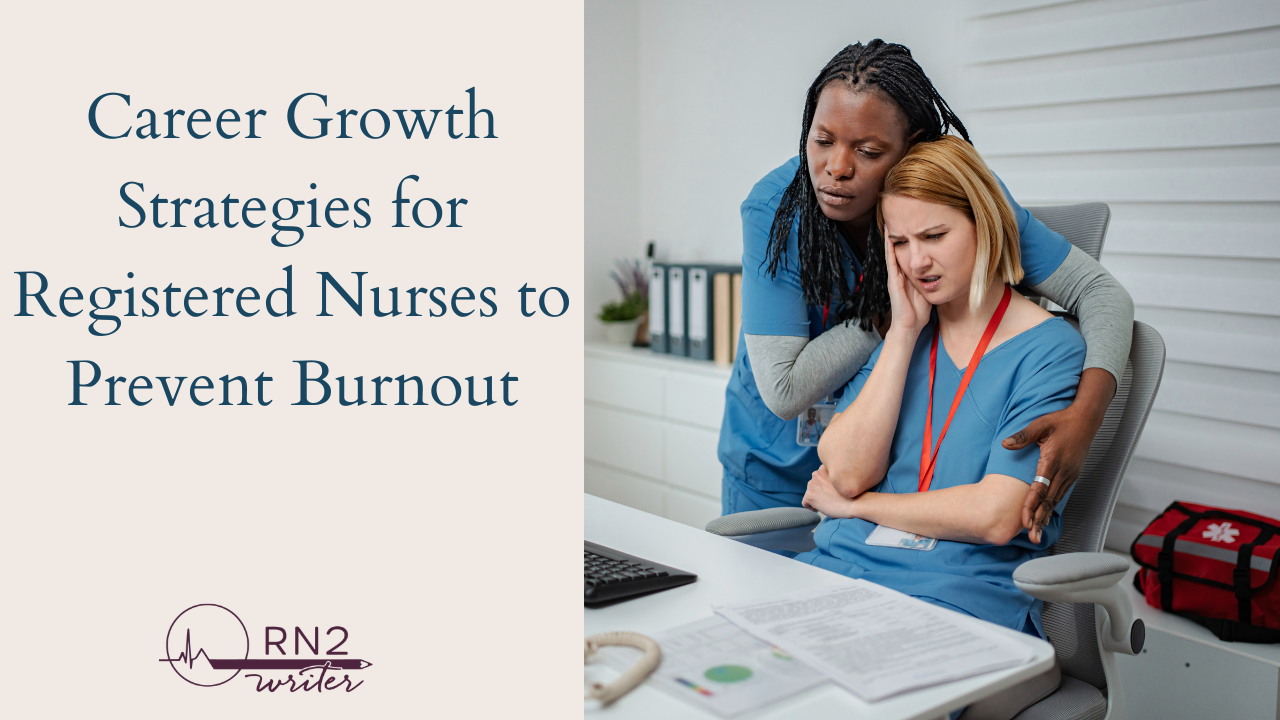
Nursing in the U.S. is at a breaking point. Almost half of all nurses (about 45%) say they are mentally and physically exhausted. Even though around 63% of nurses still love what they do, the stress of the job is making it harder and harder to stay at the bedside.
More than just fatigue, this signifies a systemic breakdown in the sustainability of the bedside nursing model.
However, career growth can be a powerful tool to prevent burnout as a registered nurse. When you feel stuck, exhaustion grows. But your energy shifts when you feel challenged, valued, and progressing.
Below are a few strategies that can help you grow your career while keeping burnout at bay.
Sponsored Post: This article is sponsored by Elmhurst University. RN2writer maintains editorial standards and only partners with brands aligned with our audience.
#1 Specialize to Prevent Monotony
One of the most effective strategies for mitigating burnout is the transition into specialized nursing roles.
Specialization allows you to focus on a specific patient population. This focus provides a sense of mastery and intellectual engagement. Both of these are critical components of professional satisfaction.
Nurses often move to high-acuity environments like the intensive care unit (ICU) or emergency room (ER) to escape the routine of general floors. In the ICU, the nurse-to-patient ratio is typically 1:1 or 1:2. This allows for a deeper level of care.
It also provides a higher degree of clinical challenge. So, you must master advanced technologies like ventilators and hemodynamic monitoring.
If you want to really take off (literally), consider flight nursing. Right now, the air ambulance market is booming. The market, worth $7 billion in 2024, is expected to double to over $14 billion by 2035.
Forensic nursing is another specialty you can consider if you’re drawn to both medicine and criminal justice. These specialists provide compassionate care to victims while expertly documenting physical evidence for the legal system.
#2 Move from Doing to Leading
There comes a point in many nurses' careers where the physical demands of bedside care start to take a toll.
If your back aches and your compassion tank is running low, moving into leadership might be your next best move. Leadership roles allow you to use your experience to shape the work environment, advocate for staff, and mentor the next generation of caregivers.
Like many nurses, you may be at a crossroads. You want more responsibility and a better salary, but don't want to spend four more years in school. To move to leadership roles, you need to have a master's degree.
An online Master of Science in Nursing (MSN) degree can help you fast-track your way into advanced practice or administrative roles without quitting your job.
The job outlook for nursing leadership is projected to grow by about 28% by 2032. As the field is booming fast, people from other careers are now joining via the online direct-entry MSN program.
Elmhurst University explains that these programs focus on hands-on practice and teach the skills needed to keep patients safe and provide top-quality care.
#3 Develop Non-Clinical Skills That Expand Your Options
Moving into a non-clinical role can be a great way to stay in healthcare without the exhaustion of bedside work. These non-bedside roles often leverage clinical knowledge in administrative, technological, or legal contexts.
Nursing informatics is a rapidly growing field. It involves using data and technology to improve patient care. Approximately 77% of nurse informaticists are highly satisfied with their careers. Nearly half of them make more than $100,000 annually.
Informatics nurses integrate nursing science with information technology to optimize patient care systems, such as electronic health records (EHRs). This role is perfect if you are tech-savvy and want to solve the systemic inefficiencies that cause frustration at the bedside.
Your clinical background can also serve as a strong foundation for clinical documentation improvement (CDI). In this role, nurses review medical records to ensure accuracy, compliance, and appropriate reimbursement. Your ability to interpret complex cases, recognize gaps, and communicate clearly with providers makes you a natural fit.
Learning things like data analysis, medical writing, or how healthcare policy works can give you way more job options. Even a short certificate in health tech or quality management can open doors to high-paying office or remote jobs that you might not have realized were available to nurses.
You Are Your Best Investment
The most important thing to remember is that you are more than your job description. You are a highly skilled professional in one of the most versatile industries in the world.
Burnout happens when you feel stuck. But in nursing, you are never really stuck. Your career is a long road, not a single stop, so make sure to take care of yourself along the way. You’ve spent your life caring for everyone else; now, it’s time to choose a path that cares for you, too.
Take a deep breath, look at your options, and don't be afraid to try something new. You’ve earned the right to a career that fulfills you without draining you.
Author Bio:
Zainab is a skilled writer, with expertise in diverse niches, including health, lifestyle, business, technology, and travel. When she is not writing, you will find her in the kitchen, experimenting with different recipes from across the globe.
Join 44,000 Nurses Who Read ShiftNotes Every Wednesday - Plus Get the Paid-to-Write Protocol FREE
Become a health writer in one afternoon with my mini-training, The Paid-to-Write Protocol. Find your first 10 magazines to pitch using my proven method.
All free, just for subscribing to my weekly newsletter ShiftNotes:
We hate SPAM. We will never sell your information, for any reason.
Author